Performing Realness: How Documenting Your Life Became a Second Job
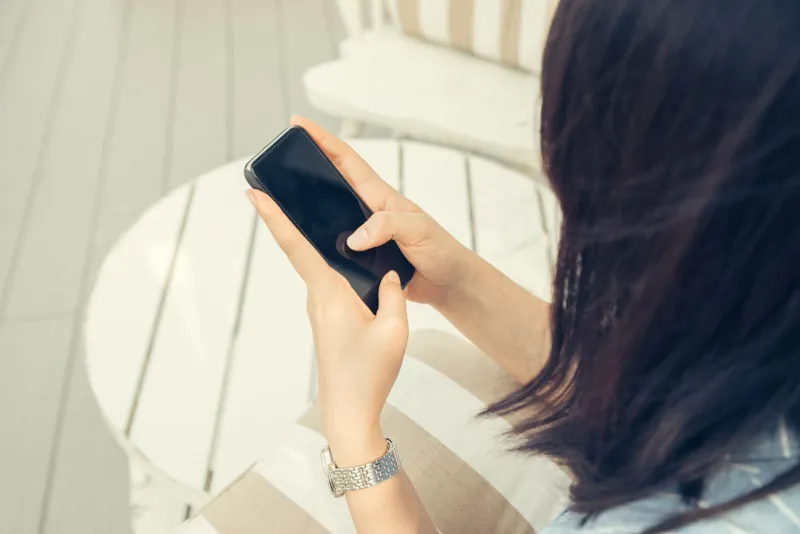
There's a specific kind of exhaustion that hits when you're at a really good dinner — great food, great people, maybe a candle flickering in just the right way — and your first instinct isn't to soak it in. It's to reach for your phone.
Not because you're bored. Not because you're avoiding anyone. But because somewhere along the way, a moment stopped feeling fully real until it was documented, shared, and responded to.
Welcome to the authenticity trap. It's sneaky, it's everywhere, and there's a decent chance it's making your actual life feel strangely hollow.
The Promise That Got Us Here
Remember when "being real online" felt like a rebellion? Around the early 2010s, a wave of influencers and everyday users started pushing back against the glossy, over-filtered world of aspirational content. They showed their messy kitchens, cried on camera, posted unedited photos, and talked openly about anxiety and burnout. It felt radical. It felt human.
And honestly? For a minute, it was.
But the internet has a way of absorbing everything — including rebellion — and turning it into a format. "Authentic content" became a genre. Vulnerability became a strategy. The messy-bun, no-makeup confessional video got its own aesthetic, its own lighting, its own editing style. Suddenly, being real online required just as much production as the polished stuff it was supposed to replace.
We didn't get rid of the performance. We just changed the costume.
Why We Keep Reaching for the Phone Anyway
Here's the uncomfortable psychology underneath all of this: sharing personal moments online genuinely does feel good — at least initially. There's a neurological reward loop involved. You post something vulnerable or "real," people respond warmly, and your brain registers that as social connection and validation. Dopamine does its thing. You feel seen.
The problem is that the loop is addictive in exactly the wrong way. The more you chase that hit of being witnessed, the more you start to experience your own life through the lens of how it will be received. You're not fully at the concert. You're mentally drafting the caption for the video you're about to take of the concert.
Psychologists have a term for this kind of split attention — it's sometimes called "self-distancing," and while it can be useful in certain therapeutic contexts, doing it constantly means you're never fully inside your own experiences. You're always hovering slightly above them, narrating.
And narrating is exhausting.
Curated Authenticity Is Still Curation
Here's what nobody really wants to admit: there is no such thing as unfiltered sharing online. The second you decide to post something, you've made a choice. You chose that photo over the seventeen others. You reworded the caption three times. You posted at 7 p.m. because engagement is better then.
None of that is wrong, exactly. But calling it "authentic" is a stretch.
What we've actually built is a new set of performance standards that are, in some ways, more demanding than the old ones. Looking too polished reads as fake. Looking too messy reads as try-hard. The sweet spot — effortlessly relatable, casually vulnerable, visually cohesive without appearing to try — requires constant calibration. It's a full-time aesthetic gig disguised as just "being yourself."
For a lot of people, especially younger Americans who grew up with social media as a given, this calibration is so ingrained that they're not even fully aware they're doing it. The performance has become automatic. Which makes it harder, not easier, to step outside of.
What Gets Lost in the Narration
There's a quieter cost here that doesn't get talked about enough: the moments you miss while you're busy capturing them.
Your nephew's first steps. The way a road trip feels in the hour before you reach your destination. A conversation that goes somewhere unexpected and real. These things don't compress well into content. They live in the pauses, in the physical sensation of being somewhere, in the specific way someone laughs that you can't quite replicate on video.
When you're documenting, you're necessarily outside the moment, observing it. And some moments don't survive that kind of observation. They require your full, undivided, un-narrated presence to actually land.
This isn't a new idea — philosophers have been talking about the tension between experience and representation forever. But it hits differently when the tool doing the interrupting is something you carry in your pocket and check roughly 96 times a day (yes, that's a real average from pre-2023 research, and it's almost certainly gone up).
Practical Ways to Actually Live Without Broadcasting It
None of this means you need to delete your accounts or go full Thoreau. But there are some genuinely useful ways to loosen the grip.
Try a "post later" rule. If something feels share-worthy in the moment, give yourself a 24-hour window before posting. You'll often find the urge fades — which tells you the impulse was more about the sharing than the experience itself.
Designate phone-free pockets in your week. Not whole days (that can feel punishing and dramatic). Just specific contexts: dinner with certain people, the first hour of the morning, any time you're outdoors doing something you actually love.
Notice the narration voice in your head. This is the sneaky one. You don't have to be actively filming to be in performance mode. If you catch yourself mentally composing how you'd describe what you're currently doing to someone else, that's a signal to come back into your body and your actual experience.
Let some things be just for you. Not everything needs an audience. A great meal, a funny thing your friend said, a view that stopped you cold — these can just be yours. No one is taking attendance.
Being Real Might Mean Being Quiet
The real irony of the authenticity era is that the most genuine version of yourself might be the one that doesn't broadcast much at all. The self that laughs without checking to see if it looked cute. The self that sits with a hard feeling without immediately turning it into a caption. The self that lets a good moment be good without needing anyone else to confirm it.
That version of you still exists. It's just gotten a little buried under the content strategy.
You don't have to perform your realness. You're allowed to just be real — quietly, privately, without an audience — and let that be enough.