Sweatpants at Dinner, Bras as Tops, and the Death of Trying Too Hard

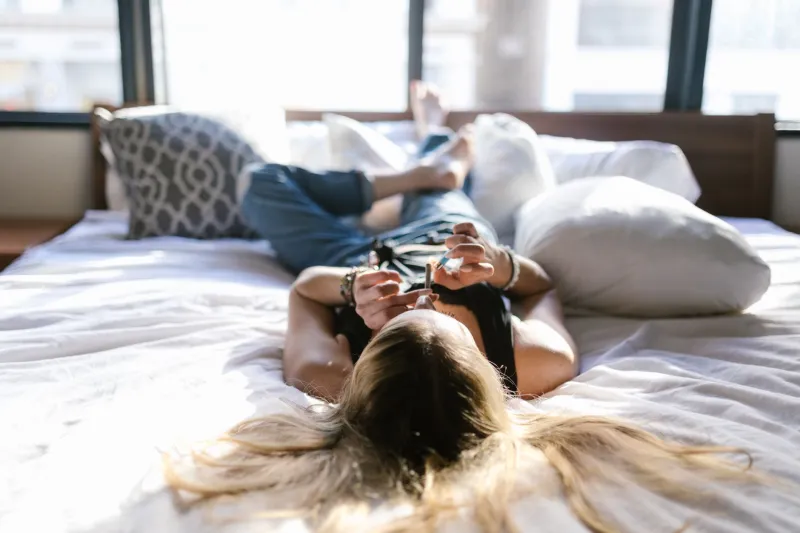
Photo by Photo by isaac macdonald on Unsplash on Unsplash
There's a scene playing out in restaurants, offices, and grocery stores across the country that would have been unthinkable fifteen years ago. People are showing up — to real places, with other real people — in clothes that were designed for the couch. Bralettes worn as shirts. Crocs at airports, and not apologetically. Faces without a trace of makeup, not because someone ran late, but because they simply decided not to bother.
And here's the thing: nobody's that mad about it.
Something has genuinely shifted in American dress culture — and it's bigger than a trend cycle or a pandemic hangover. What's happening looks a lot like a collective exhale after decades of performing a version of yourself that was mostly for other people's benefit.
How We Got Here
To understand where we are, it helps to remember where we came from. For most of the 20th century, American fashion operated on a pretty clear hierarchy: formal was aspirational, casual was acceptable only in specific contexts, and how you dressed was understood as a direct signal of how seriously you took yourself — and how seriously others should take you.
Dressing up was a form of social currency. It communicated effort, ambition, and belonging. Department stores built entire floors around the idea that you needed different clothes for different performances of your life: work clothes, going-out clothes, church clothes, vacation clothes. The message was that each version of you required a costume.
That framework started cracking in the 2010s, when athleisure went mainstream and Silicon Valley made the hoodie a power symbol. But the real rupture came during the pandemic, when millions of Americans spent months in literal pajamas and discovered something inconvenient: they were fine. More than fine, actually. Comfortable, functional clothing turned out to not be a slippery slope into chaos. It was just... nicer.
The Bra Strap Heard Round the World
Few things capture this moment better than what's happened with visible undergarments. The bralette-as-top trend has been building for a few years, but it's fully normalized now — and it carries a specific cultural charge.
For decades, visible bra straps were a faux pas. Women were expected to manage, conceal, and minimize the evidence that they were wearing undergarments at all. The effort required to maintain that illusion — strapless bras, fashion tape, specific necklines — was invisible labor, which is precisely what made it so effective as a social norm.
Wearing your bra as the top layer is, in that context, a small act of refusal. It's saying: I'm aware of the convention, and I'm not doing it. Fashion psychologist Dawnn Karen has written about how clothing choices function as nonverbal communication — and what this particular choice communicates is something like I'm not performing femininity for your comfort.
The same logic applies to the visible waistband, the deliberately oversized silhouette, the shoe that prioritizes arch support over aesthetics. These aren't accidents or lapses in effort. They're decisions.
The Makeup Question Is More Complicated
The declining use of makeup among American women — particularly younger women — has been documented by the beauty industry itself, somewhat nervously. Sales of foundation and heavy-coverage products have dropped, while skin-care spending has gone up. The shift is real.
But the story here is genuinely complicated. "No makeup" has become its own aesthetic, complete with its own products (tinted moisturizers, clear brow gel, strategic skincare that creates the appearance of effortless skin). The line between wearing less makeup and wearing makeup that looks like you're wearing less makeup is blurry enough to drive you a little crazy.
This is where the liberation narrative gets thornier. If "natural" becomes a look you work toward, have you actually escaped the performance — or just changed costumes? Sociologist Erving Goffman's concept of impression management is useful here: we are almost always presenting a version of ourselves to the world, even when we think we're just being real. The question isn't whether you're performing, but what you're performing for.
That said, there's a meaningful difference between performing for external approval and performing for your own sense of self. Some people genuinely feel more like themselves with bare skin. That's not less authentic just because it also happens to be trendy.
Burnout as a Fashion Force
It would be naive to separate any of this from the broader cultural exhaustion that's been building for years. The research on burnout in America is not subtle — it's widespread, it's cross-generational, and it has real behavioral effects. When people are depleted, they start making different calculations about what's worth the energy.
Getting dressed, it turns out, is something people are increasingly unwilling to spend that energy on. Not because they've stopped caring about themselves, but because they've started caring about different things. Comfort isn't laziness. For a lot of people, it's a deliberate reallocation of limited resources.
This tracks with what's happened in other areas of American life — the rejection of hustle culture, the growing interest in rest and boundaries, the quiet epidemic of people opting out of social performances that feel hollow. Fashion is just the most visible expression of a much broader renegotiation.
Is This Actually Liberation, Though?
Here's the honest tension at the center of this whole conversation: liberation that gets packaged, marketed, and sold back to you is still a product.
Athleisure is a multi-billion-dollar industry. "Effortless" dressing has its own influencer ecosystem. The brands that were once selling you aspirational discomfort have pivoted to selling you aspirational comfort — same business model, different pitch. When Lululemon tells you that wearing their leggings is a form of self-care, they're not exactly dismantling the system.
And yet — maybe that doesn't fully cancel out what's real here. Trends are always co-opted by commerce; that's not new. What matters is whether the underlying shift in values is genuine. And there's real evidence that it is. People are making choices about how they dress that prioritize how they feel over how they appear, in ways that have measurable effects on their daily lives. That's not nothing.
What It Might Mean Going Forward
The comfort-first movement, whatever you call it, seems less like a trend and more like a renegotiation of a longstanding social contract. The old deal was: you perform effort through your appearance, and in exchange, you receive social acceptance and perceived competence. A lot of Americans are quietly deciding that deal wasn't that good.
What replaces it isn't fully formed yet. We're in the middle of it. But the direction seems clear enough: toward clothing that serves the person wearing it, rather than the audience watching them. Toward appearance choices made from the inside out rather than the outside in.
Whether that ends up being genuinely liberating or just a new set of norms dressed up in softer fabric — well, that's probably going to depend on who's doing the choosing, and why.
For now, the sweatpants are staying. And honestly? They look fine.