Stop Apologizing for What You Watch: The Case for Owning Your Trashy Taste
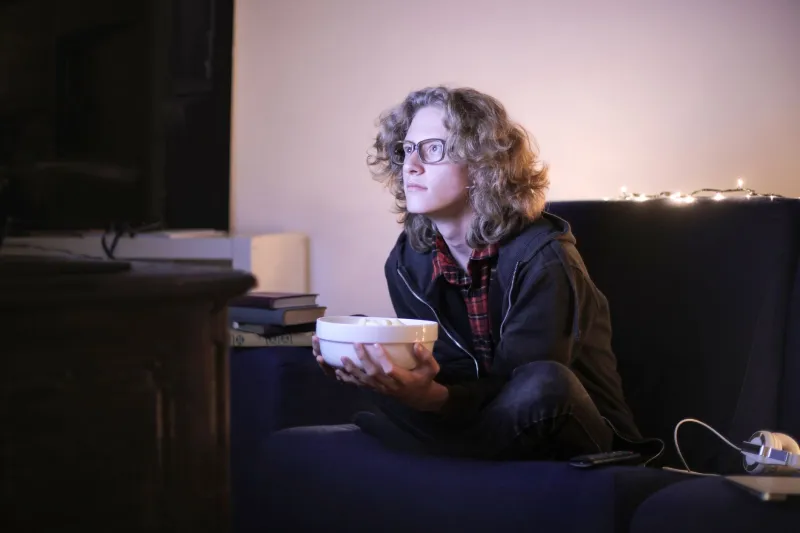
Somewhere between your third consecutive episode of The Real Housewives and the moment you dog-eared page 312 of a beach read you'd never display spine-out on a bookshelf, you probably felt it — that familiar little pinch of self-consciousness. The mental footnote that says: I know this is dumb, but...
Here's the thing: that disclaimer is getting old. And a growing chorus of psychologists, cultural critics, and regular people who are simply done performing sophistication are starting to say so out loud.
We might finally be entering the era of the guilt-free guilty pleasure. And honestly? It's about time.
The 'But' That Ruined Everything
For decades, American pop culture has operated on a kind of unspoken two-tier system. There's the stuff you're supposed to love — prestige dramas, literary fiction, documentary films with subtitles — and then there's everything else, which you're allowed to enjoy only if you signal, loudly and clearly, that you know better.
That's where the apologetic "but" comes in. I know it's trash, but I can't stop watching it. It's totally a guilty pleasure, but whatever. The ironic distance was the ticket of entry. You could enjoy the lowbrow stuff as long as you acknowledged its lowbrow-ness.
But something has shifted. People are increasingly dropping the disclaimer entirely. They're saying they love Love Is Blind — full stop, no asterisk. They're recommending their favorite paranormal romance series without the self-deprecating laugh. They're building entire podcast playlists around celebrity gossip and not explaining themselves to anyone.
And weirdly, psychologists think this is a sign of genuine emotional growth.
What Shame Around Entertainment Actually Costs You
Dr. Pamela Rutledge, a media psychologist who has written extensively on entertainment and well-being, has argued for years that the concept of the "guilty pleasure" is itself a kind of cultural trap. The guilt part, she points out, doesn't come from the content — it comes from internalizing someone else's hierarchy of what counts as worthwhile.
That internalization has a real cost. When you spend mental energy managing how your tastes appear to others, you're not actually relaxing. You're performing relaxation. And there's a meaningful difference between those two things.
Think about the last time you watched something you loved without telling anyone about it versus the last time you mentioned it at a dinner party with a preemptive cringe. One of those experiences belongs entirely to you. The other is partly a social transaction.
Research in self-determination theory — the psychological framework that looks at what makes people feel autonomous and fulfilled — consistently finds that acting in alignment with your actual preferences, rather than socially constructed ones, is tied to higher life satisfaction. In other words, watching what you actually want to watch, without the performance of embarrassment, is legitimately good for you.
Reality TV Doesn't Need Your Apology
Let's take reality television specifically, since it's probably the most reliably sneered-at genre in the American entertainment landscape.
The arguments against it are familiar: it's manufactured, it's shallow, it rewards bad behavior. Fine. But those arguments have been made for 25 years while millions of people kept watching anyway — and kept pretending, to varying degrees, that they didn't.
What's interesting is what reality TV actually does for viewers who let themselves engage with it honestly. Studies on narrative transportation — the psychological phenomenon of getting genuinely absorbed in a story — show that the emotional responses we have to unscripted drama, even highly produced unscripted drama, are real. The social dynamics on a show like Survivor or The Bachelor activate the same neural circuitry we use to process real social situations. We're not just passively consuming junk; we're running social simulations.
Romance novels work similarly. The genre gets relentlessly mocked in literary circles, but it outsells virtually every other fiction category in the US year after year. And readers who actually talk about why they love it — without the apologetic preamble — often describe something that sounds a lot like what literary fiction readers say about their favorites: emotional catharsis, character investment, the satisfaction of a story that delivers what it promises.
Maybe the problem was never the content. Maybe it was always the shame.
The Authenticity Connection
There's a broader cultural moment happening here that's worth naming. Across a lot of spaces — social media, friendship, work — people are visibly exhausted by the performance of being a certain kind of person. The curated self is losing its appeal. Authenticity, however messy and contradictory, is increasingly what people actually want from each other.
Entertainment taste is one of the more personal expressions of who you actually are when no one's grading you. What you reach for when you're stressed, lonely, bored, or just need an hour to not think — that's real data about yourself. Dismissing it, or wrapping it in irony so no one can hold you accountable for it, is a small but consistent way of staying estranged from your own preferences.
Cultural critic and author Chuck Klosterman has written about how the music, movies, and TV that shaped us most deeply are rarely the things we'd put on a list of our favorites if we thought someone was watching. The stuff that actually gets into us tends to be the stuff we consumed without armor on.
Owning your taste — including the unfashionable parts — is, in a quiet way, an act of self-knowledge. It's saying: this is what I actually like, not what I've decided I should like.
How to Actually Let Go of the Guilt
This is easier said than done, especially if you've spent years performing good taste. A few things that seem to help:
Stop pre-apologizing. When you recommend something you love, try recommending it without the disclaimer. See what happens. Most people will just take the recommendation.
Notice what you actually reach for. Pay attention to what you choose when you have total freedom — no one watching, no social media to post about it. That's a pretty honest picture of your preferences.
Separate quality from value. Something can be objectively not great and still be genuinely valuable to you. Those aren't the same measurement.
Give other people the same permission. When someone mentions their guilty pleasure, skip the knowing smirk. You probably have one too.
The entertainment you love — even the stuff you'd never put on a resume — is part of who you are. Treating it like a shameful secret doesn't make you more sophisticated. It just makes you a little less honest with yourself.
And honestly? The Real Housewives franchise has been running for nearly 20 years. At some point, loving it stops being a guilty pleasure and starts being just... a preference.
Own it.