The Realness Trap: How Trying to Be Authentic Online Became Its Own Kind of Exhausting Performance
Somewhere between your third "candid" mirror selfie and the moment you rewrote your Instagram caption six times to sound more off-the-cuff, something went sideways. What started as a cultural pushback against over-polished, filter-heavy content has quietly morphed into its own elaborate production. The demand for realness didn't kill performance — it just gave it a rebrand.
And honestly? Most of us are tired.
When 'Just Be Yourself' Became a Full Strategy
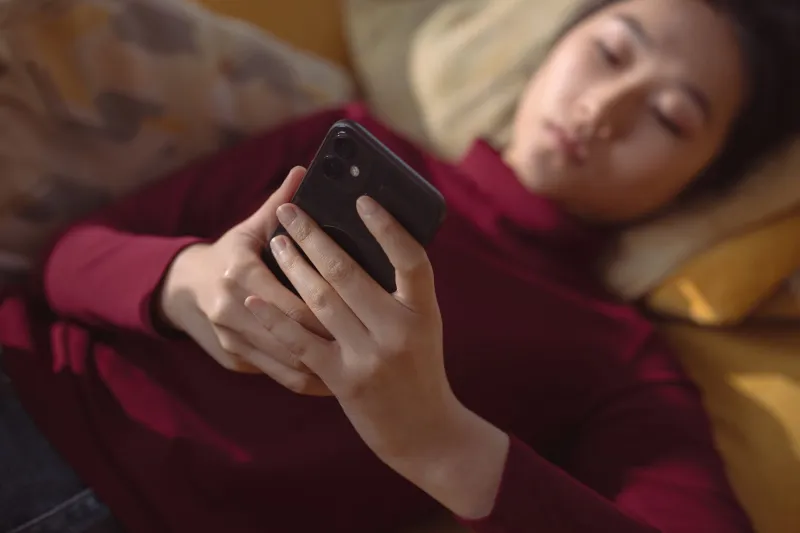
There's a specific kind of mental gymnastics that happens when you're trying to post something "authentic." You take the photo. You think it looks too staged. You retake it. You add a slightly unflattering angle to seem relatable. You write a caption that sounds casual but still communicates exactly what you want people to think about you. You post it, then spend the next 20 minutes wondering if it came off right.
This isn't an outlier experience — it's practically universal for anyone with a social media presence in 2024.
Dr. Maya Hendricks, a behavioral psychologist based in Chicago who studies identity and digital behavior, puts it bluntly: "The authenticity movement online didn't reduce self-monitoring. It increased it. People are now performing the absence of performance, which is arguably more cognitively demanding than just curating a highlight reel."
That's the trap in a nutshell. Authenticity, as a social media value, has been so thoroughly commodified that it now functions like any other aesthetic — something you construct, refine, and optimize for engagement.
The 'Unfiltered' Filter
Take a scroll through TikTok or Instagram on any given Tuesday. You'll find creators shooting in bad lighting to seem more relatable. You'll find confessional posts carefully structured for maximum emotional resonance. You'll find "raw" moments that were clearly staged, "messy" apartments that are actually just strategically disheveled, and "no-makeup" looks that took 45 minutes to achieve.
None of this is a moral failing. It's just what happens when an entire culture decides that realness is the most valuable commodity — and then tries to produce it at scale.
Jamila, a 28-year-old content creator from Atlanta who asked to use only her first name, describes the spiral well. "I started my page because I was burned out by fake perfection. I wanted to be honest. But then I noticed my honest posts weren't performing as well, so I started thinking about how to be honest in a way that people would actually respond to. And then I realized I was back to square one — just curating a different version of myself."
She's not wrong. The mechanics haven't changed. Only the aesthetic has.
Why Your Brain Hates This
The psychological toll of this contradiction is real and documented. Research on self-presentation theory — work that goes back to sociologist Erving Goffman long before the internet existed — tells us that humans naturally manage impressions in social contexts. That's not pathological; it's just how people work.
But there's a meaningful difference between normal social self-presentation and the always-on, algorithmically incentivized version we're living through now. The feedback loop of likes, comments, and follower counts creates what psychologists call a "continuous performance environment" — one where there's no backstage, no moment to drop the act.
"What we're seeing clinically is a kind of identity fatigue," says Dr. Hendricks. "People are so busy managing how they come across — even in their most 'authentic' moments — that they lose touch with what they actually think or feel outside of how it might look to an audience."
In plain terms: you start performing realness so often that you forget what real actually feels like.
The Algorithm Doesn't Care About Your Soul
Here's the uncomfortable structural truth underneath all of this. Platforms like Instagram and TikTok don't reward authenticity — they reward the appearance of authenticity that generates engagement. These are not the same thing, and the distinction matters enormously.
When a creator's raw, tearful video about burnout goes viral, the algorithm files that data point: emotional vulnerability = high engagement. Other creators see it, consciously or not, and start incorporating emotional vulnerability into their content strategy. The original raw moment gets replicated as a template. Within months, "honest breakdowns" are a genre.
This isn't cynicism — it's just how content ecosystems evolve. The problem is that real people are caught inside this system, trying to express genuine things while simultaneously navigating incentive structures that turn everything genuine into a format.
So What's Left?
It's tempting to conclude that authentic self-expression online is simply dead — that the whole thing is performance all the way down and we should just accept it. But that feels like giving up something worth fighting for.
What a growing number of people seem to be doing instead is quietly opting out of the authenticity arms race altogether. Not with dramatic announcements or "I'm taking a break" posts (which are, famously, their own kind of performance), but with a genuine recalibration of what they share and why.
Marco, a 34-year-old teacher from Portland, deleted his Instagram last year and moved most of his social interaction to a small group chat with close friends. "I just got tired of the translation layer," he says. "Everything I posted had to go through this filter of how it would read to strangers. I wanted to just say something to people who already know me."
That instinct — toward smaller, lower-stakes, less-optimized forms of connection — might be the closest thing to genuine authenticity that the current digital landscape actually allows.
The Exhaustion Is the Signal
If you've ever felt vaguely hollow after posting something that got great engagement, or frustrated that your most honest moment didn't land the way a more polished one did, you're not broken. You're just noticing the gap between what the system rewards and what actually means something to you.
That gap is worth paying attention to. Not because there's an easy fix — there isn't — but because the exhaustion itself is information. It's your brain telling you that something in the equation doesn't add up.
Being yourself online has never been harder, not because people are less genuine than they used to be, but because the infrastructure around self-expression has gotten so sophisticated that sincerity now has to compete with its own simulation.
And until the platforms change — which, let's be real, isn't happening anytime soon — the most radical thing you might be able to do is notice when you're performing realness, and ask yourself who you're actually performing it for.