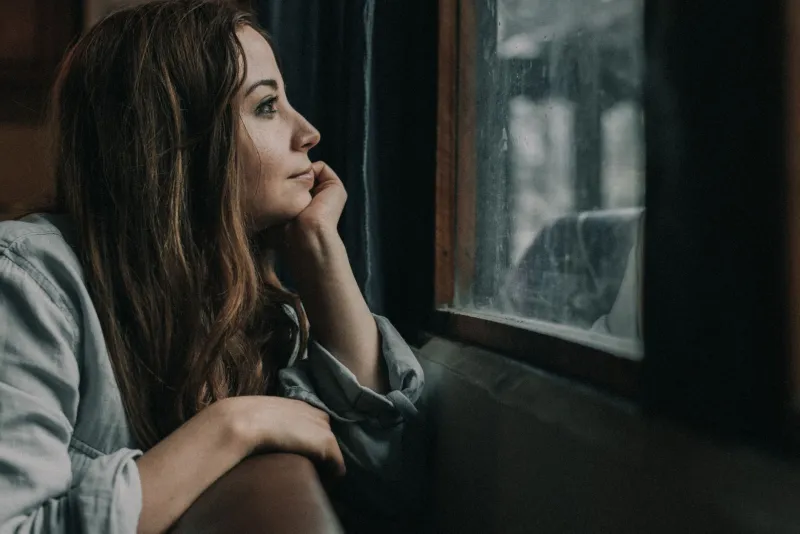
The Funny Friend Who's Quietly Falling Apart
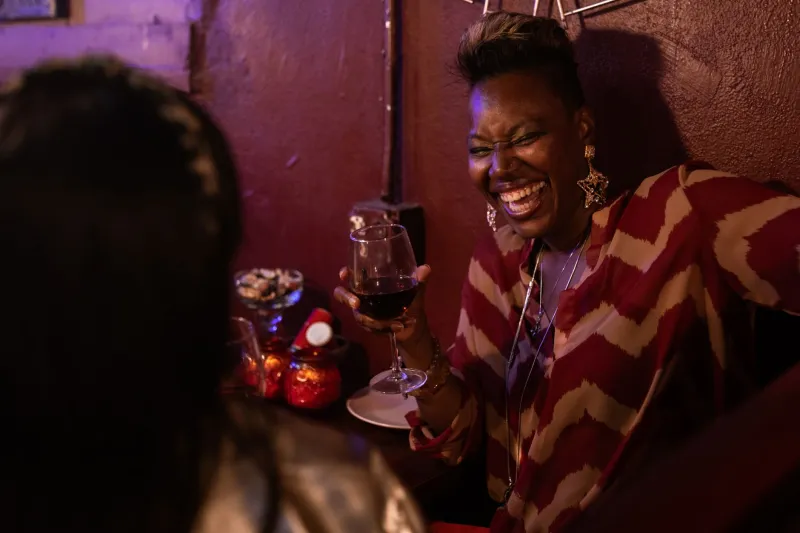
You're the one who makes the reservation, breaks the awkward silence, remembers everyone's drink order, and somehow turns a bad night into a good story by the time the Uber arrives. People light up when you walk in. You're the reason the group chat actually responds. You are, by all social metrics, the fun one.
And you are absolutely exhausted.
Not in a way you'd easily admit. Not in a way that gets a lot of sympathy, because from the outside, your life looks like a constant good time. But there's a specific kind of tired that comes from performing your own personality for so long that you've forgotten where the performance ends and the actual you begins — and if you're reading this, you probably know exactly what that feels like.
How the Casting Happens
Nobody hands you a script. The role of "fun one" develops gradually, through a thousand small social moments where your energy got rewarded and your exhaustion got ignored.
Maybe you were the kid who could make the whole classroom laugh. Maybe you learned early that humor was the safest way to navigate tension at home. Maybe you just happen to be naturally extroverted and your friend group leaned into it until it calcified into expectation. However it started, at some point the role stopped being something you chose and became something you were assigned — and opting out started to feel like letting people down.
Social psychologists call this "identity foreclosure" when it happens in adolescence — the process of locking into an identity before you've had the chance to fully explore who you are. But it happens in adulthood too, just more quietly. Friend groups develop their own ecosystems, and once you've been cast in a role, the group subtly (and sometimes not so subtly) works to keep you there. It's not malicious. It's just how social dynamics function. The system found its equilibrium, and you're part of it.
The Tax Nobody Talks About
Here's what the fun one actually carries that doesn't show up in anyone's perception of them.
First, there's the emotional labor of reading every room. Being reliably entertaining or uplifting isn't passive — it requires constant monitoring of other people's energy levels, moods, and needs so you can calibrate your output accordingly. You're not just being yourself; you're being a version of yourself that the room requires. That's a cognitive and emotional load, and it accumulates.
Second, there's the invisibility of your own bad days. When you're the person who's always "on," showing up subdued or quiet or just human registers as an event. People ask if you're okay with a slightly panicked edge, as if your low energy is a warning sign rather than a normal Tuesday. So you learn to perform fine even when you're not, because the alternative — being the reason the vibe tanks — feels worse than just pushing through.
Third, and maybe most painfully, there's the loneliness of never being taken seriously. The fun one's problems get a shorter runway. Their anxiety gets minimized ("you? anxious? no way, you're always so upbeat"). Their sadness gets treated as temporary weather, something to be joked through rather than actually held. You become the person everyone wants at the party and almost nobody thinks to check on.
When the Mask Gets Heavy
The burnout that comes from sustained social performance looks different from regular burnout. It's not always about being tired from too much. Sometimes it's about being depleted from the specific effort of maintaining a self-image that doesn't fully match your internal reality.
Psychologists sometimes describe this through the framework of "surface acting" versus "deep acting" — terms borrowed from Arlie Hochschild's research on emotional labor. Surface acting is performing an emotion you don't feel. Deep acting is convincing yourself to actually feel it. The fun one often oscillates between both, and both are draining in different ways.
Over time, this creates a strange kind of alienation from yourself. You start to lose track of what you actually find funny versus what you've trained yourself to perform as funny. You stop knowing if you genuinely want to go out or if you're just afraid of who you'll be if you don't. The role becomes the only version of you that feels socially legible — and that's when it starts to feel less like a personality and more like a cage.
The Fear of Dropping It
So why not just... stop? Why not have an off day, let the group chat go quiet, skip the party, and let someone else carry the energy for a while?
Because the fear underneath all of it is that without the role, you become less valuable. That people don't actually want you — they want the performance. That if you show up tired and quiet and not particularly funny, the group will quietly recalibrate around someone else, and you'll find out that your place in it was conditional all along.
That fear is usually bigger than the reality. Most people, when given the chance, are relieved to see the fun one be a real person. Vulnerability from someone who's always been "on" tends to deepen relationships rather than damage them. But you don't know that until you try it, and trying it feels like a risk that your nervous system is not particularly interested in taking.
What It Actually Looks Like to Break Free
Let's be honest: you're not going to stop being funny. That's probably just who you are. But there's a difference between humor as genuine self-expression and humor as a defense mechanism against being seen. One energizes you; the other hollows you out.
Breaking free from the personality box doesn't mean a dramatic personality overhaul. It usually starts smaller than that. It's saying "I'm not really feeling it tonight" without apologizing for it. It's letting a conversation stay a little heavy instead of immediately redirecting it toward laughter. It's asking for something instead of always being the one who gives.
It's also, sometimes, having the uncomfortable conversation with the people closest to you. Not an announcement, just a check-in. Hey, I've been carrying a lot lately. I don't always feel like the version of me that I show up as. Most people who actually care about you will respond to that. And the ones who don't? That's useful information too.
The fun one deserves to have a bad day. They deserve to be boring sometimes, to be sad, to not have a bit ready for every uncomfortable silence. They deserve to be a person, not just a role.
You probably already know this. You're just waiting for permission to act like it.