Pass the Wine and Pull Up a Chair: America's Dinner Party Comeback Is Real
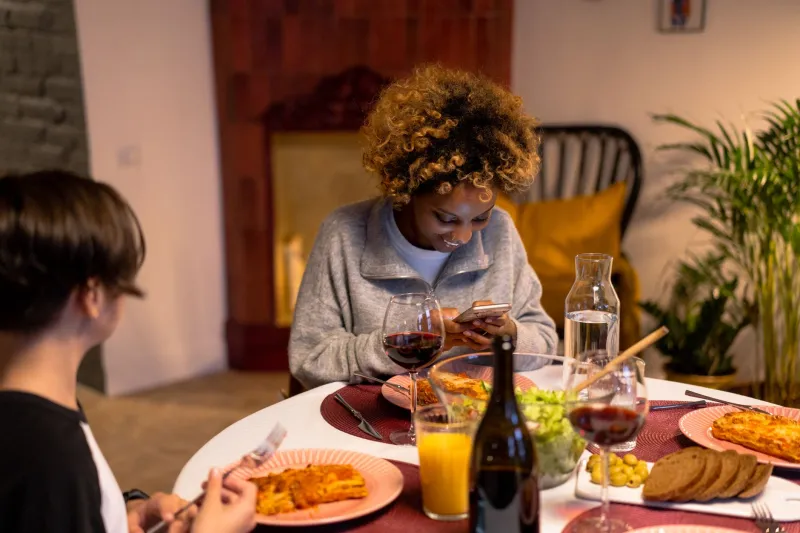
For a while there, "hosting" felt like something your parents did. Something that required a tablecloth, a centerpiece, and at least one dish that spent four hours in a slow cooker. It felt like effort in a way that just didn't match the vibe of the past decade — when going out was easy, Uber Eats was a personality trait, and the idea of cleaning your apartment for guests felt borderline offensive.
But something has shifted. Quietly, steadily, and with a surprising amount of enthusiasm, Americans are pulling out their mismatched wine glasses, texting their six closest friends, and saying the words: come over Saturday, I'm cooking.
The dinner party is back. And this time, it actually sounds fun.
It's Not Nostalgia (Okay, Maybe a Little)
Let's be honest — part of what's fueling this is pure, uncut nostalgia. There's a generation of people in their late twenties and thirties who grew up watching their parents entertain, who absorbed the idea of a table full of people and loud conversation and somebody's famous pasta as a kind of emotional shorthand for home. That image sat dormant for years while we all figured out how to adult, and now it's resurfacing with a vengeance.
But nostalgia alone doesn't explain the full picture. Because plenty of people hosting right now never had that reference point. They're not recreating something — they're inventing it. And that says something different.
What it says, mostly, is that restaurants got exhausting. Not bad — just exhausting. The noise, the wait, the $22 cocktails, the performance of it all. Going out used to feel like freedom. Now, for a lot of people, it feels like a commitment. You have to look a certain way, arrive on time, compete with the ambient soundtrack, split a check that somehow became a math problem, and wrap the whole thing up by 10 because the reservation after yours is already hovering.
Staying in — actually hosting — started to look like the easier, more honest option.
Control the Vibe, Control the Night
Here's what nobody talks about when they talk about the dinner party renaissance: it's also about control. Not in a weird way. In a completely reasonable, I-know-exactly-what-music-is-playing way.
When you host, you set the temperature. Literally and figuratively. You pick the playlist. You decide if shoes come off at the door. You choose whether it's a sit-down thing with actual courses or just a pile of snacks on the counter and everyone standing around the kitchen island for three hours. That kind of agency is genuinely underrated.
There's also something to be said for the intimacy it creates. A dinner party isn't a night out — it's a declaration. You're saying, I wanted to be with specifically you people, in this specific space, and I cared enough to make food. That lands differently than a group text that says "drinks Thursday?"
People are craving that specificity right now. After years of wide, shallow social connection — the kind you get from a feed full of acquaintances — there's a real hunger for something that actually feels chosen.
The 'Impressive' Pressure Is Officially Dead
One of the biggest things that changed is the vibe around what hosting is supposed to look like. For a long time, the dinner party carried this heavy expectation of performance. The food had to be impressive. The apartment had to be spotless. There was an unspoken scoreboard.
That's largely gone now — or at least, it's optional. The hosts getting the most genuine buzz right now are the ones who lean into the chaos. The person who made a big pot of chili and told everyone to bring something. The one who ordered pizza halfway through because the oven situation got complicated. The apartment with the mismatched chairs and the candles burned down to nothing.
There's a direct line between this and the broader cultural pushback against optimization. People are tired of performing even in their own homes. The dinner party that actually resonates in 2024 is one where someone spills wine on the couch and it becomes the best story of the night.
The Money Thing Is Real, Too
Let's not skip over the practical piece: going out is expensive. Like, genuinely, concerningly expensive. A dinner for four at a mid-range restaurant in most American cities is easily $200 before anyone gets a second drink. That math stops working pretty fast when you're doing it every weekend.
Hosting at home — even when you're buying good ingredients, even when you're going a little overboard on the cheese board — almost always comes out ahead. And there's a satisfaction in spending that money that feels different. You made something. You fed people. The investment is visible in a way a restaurant receipt never quite is.
For younger Americans especially, this has become a genuine lifestyle calculus. Why spend $60 on a night out that felt fine when you could spend the same amount and have an actual experience in your own space?
What It's Really About
At the core of all of this is something pretty simple: people want to feel less lonely. And they've started to figure out that the most reliable antidote isn't another bar night or another group hang that everyone half-commits to — it's a smaller, warmer, more intentional version of being together.
The dinner party, in its current form, isn't about impressing anyone. It's not about the aesthetic or the menu or whether your apartment looks like it belongs on a Pinterest board. It's about the specific, irreplaceable feeling of sitting around a table with people you actually like, eating food someone made with their hands, and talking until you forget what time it is.
That's not a trend. That's just humans being humans.
And honestly? It's about time we got back to it.