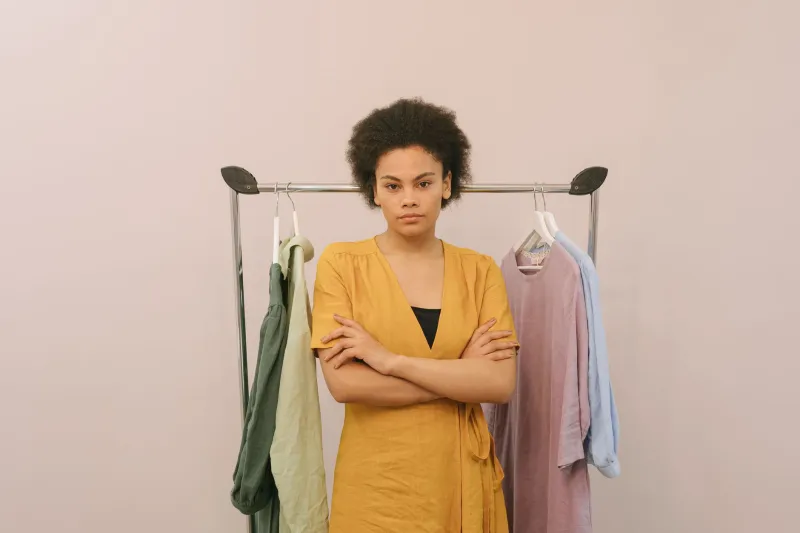
Why You Keep Checking Your Ex's Instagram at Midnight
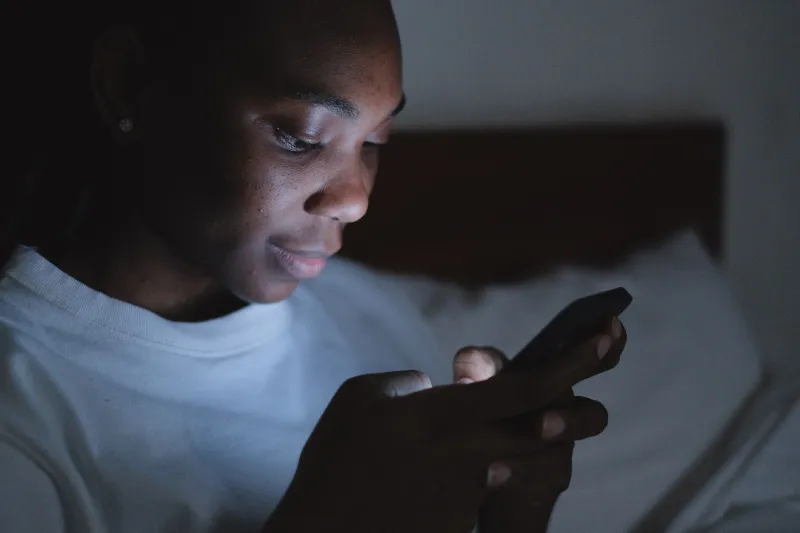
You've told yourself you're done. You might have even gone through the ceremonial unfollow — maybe you muted them, blocked them, did the whole digital cleanse. And then one night, a few weeks later, you're lying in bed, the room is dark, and somehow you're three months deep into their tagged photos, studying a stranger's face like it's a final exam you forgot to study for.
It's okay. You're not uniquely broken. You're just human in the social media age, which increasingly looks like the same thing.
The compulsive monitoring of an ex's online life is one of the most common and least talked-about behaviors that follows a breakup. People do it. People feel terrible about it. People do it again the next night. And almost nobody explains why in a way that actually makes sense.
So let's try.
Your Brain on a Breakup
First, the uncomfortable neurological truth: romantic attachment activates the same reward pathways in your brain as addiction. Studies using fMRI imaging — including notable research by anthropologist Helen Fisher — have shown that looking at a photo of a person you're in love with (or were in love with) lights up the dopamine-rich areas of the brain associated with craving and reward. The same regions implicated in cocaine dependency.
Breakups don't switch that off. If anything, they amplify it. The unpredictability of whether checking their profile will make you feel better or worse? That's called a variable reward schedule, and it's the exact mechanism behind slot machines and every social media platform ever built. Unpredictable rewards are more addictive than consistent ones. Your brain keeps going back because it doesn't know what it's going to find — and that uncertainty is neurologically irresistible.
So when you tell yourself "just one quick look," you're not being weak. You're being a mammal with a dopamine system that hasn't caught up to the concept of Instagram Stories.
The Illusion of Information Control
There's another layer underneath the neurological one, and it's psychological. After a breakup, you lose access to someone you used to have constant, intimate information about. You knew their schedule. You knew their moods. You knew what they were doing on a Saturday night. Then suddenly, you don't — and that informational void can feel genuinely destabilizing.
Social media offers a fake solution to that problem. It gives you the feeling of staying informed without any of the actual closeness. You can know they went to a concert in Brooklyn last Friday without knowing if they're happy. You can see that they're smiling in photos without knowing if they mean it. You're collecting data points that don't actually answer the question you're really asking.
And the question you're really asking — do they miss me? Am I replaceable? Was I ever the point? — is not answerable through a grid of carefully filtered photos. But your brain keeps trying anyway, because doing something feels better than sitting with uncertainty.
The New Partner Problem
Nothing escalates the spiral quite like the appearance of someone new. Suddenly you're not just monitoring an ex — you're performing an involuntary comparative analysis of yourself against a person you've never met and have no objective way to evaluate.
This is where the psychology gets particularly cruel. Research on social comparison theory, developed by Leon Festinger in the 1950s and very much still relevant, tells us that humans are wired to evaluate themselves in relation to others. We do it constantly. But the comparisons we make after a breakup are especially distorted, because we're comparing our internal experience — our full, messy, complicated reality — to someone else's external presentation, which is curated and incomplete by definition.
You see the new person's best photos. You know your own worst days. The comparison is fundamentally rigged, and you lose every time.
What makes it worse is that social media has collapsed the timeline on all of this. Previous generations of heartbroken people had to wait weeks or months to accidentally hear through mutual friends that their ex was seeing someone new. Now you can find out in real time, sometimes before the relationship is even serious, and you can watch it develop in public as if it's a show you never asked to be cast in.
What the Scrolling Is Really About
Here's the thing that most breakup advice gets wrong: the doom-scrolling isn't really about the ex. Not at its core.
It's about grief. And grief, especially the kind that comes with rejection or loss of a relationship you valued, doesn't process linearly. It circles back. It looks for evidence. It wants to build a narrative that makes sense of what happened, because the human mind is deeply uncomfortable with ambiguity and loss of meaning.
Checking their profile is a way of trying to write an ending to a story that feels unfinished. If they're miserable, maybe the relationship mattered. If they're thriving, maybe you need to understand why. If the new person seems wrong for them, maybe there's still a chapter you're not seeing. The story keeps going, and you're trying to read it through a keyhole.
Some therapists describe this as "protest behavior" — the attachment system's attempt to re-establish connection with someone who's no longer there. It's the same impulse that makes you want to text them at 2 a.m. or drive past their apartment. Social media just gives it a low-risk, high-access outlet.
How to Actually Stop (Or at Least Slow Down)
The honest answer is that willpower alone doesn't really work here, because willpower is a depleting resource and 11 p.m. is when it's most depleted. What works better is friction.
Log out of the apps instead of just closing them. Delete them from your phone's home screen. Use your phone's built-in screen time tools to limit access during late-night hours. These aren't dramatic gestures — they're just making the impulsive behavior slightly harder than it currently is, which is often enough to break the loop in the moment.
Beyond the practical: it helps to get honest about what question you're actually trying to answer when you open that profile. Name it out loud if you have to. I'm trying to figure out if I mattered. I want to know if they're happier without me. Those are real, valid, painful questions. They just can't be answered by a grid of photos — and recognizing that can take some of the compulsive charge out of the behavior.
The grief is real. The need to understand is real. The algorithm is just a very bad therapist who keeps your appointment going forever and never actually helps you move on.