Slow Living Is Not an Aesthetic — It's a Rejection of Everything You Were Told to Want
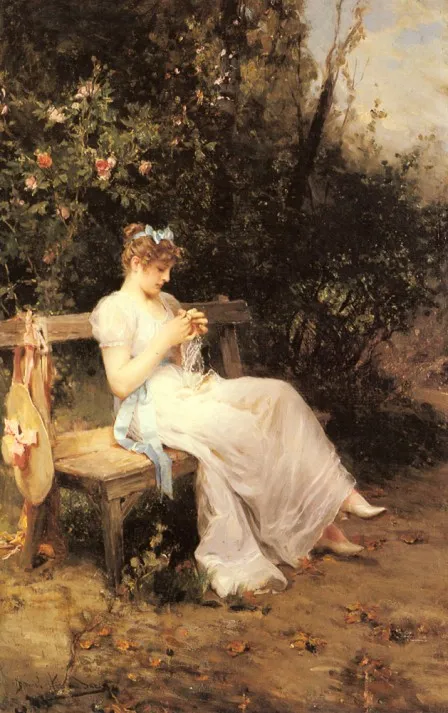
Photo: Daniel Hernández Morillo, Public domain, via Wikimedia Commons
Let's be honest about what slow living looks like on the internet: a sunlit kitchen, a ceramic mug, some kind of plant that requires specific care, and a caption about "being present." Maybe a sourdough starter. Definitely good lighting.
And look — none of that is inherently bad. Pretty kitchens are fine. Sourdough is delicious. But somewhere in the process of slow living becoming a Pinterest category, the actual substance of what it means got quietly replaced with a shopping list.
The real slow living movement — the one happening in actual American households, not curated feeds — is a lot messier, a lot more radical, and a lot more interesting than any aesthetic could capture.
What We're Actually Talking About
At its core, slow living is a philosophical rejection of hustle culture. Not a gentle pushback — a rejection. It's the decision, made consciously and often at real personal cost, to stop organizing your entire life around productivity, career advancement, and the accumulation of stuff.
That sounds simple. It is not simple. In the United States, where your job title functions as a social identity and "What do you do?" is typically the second question asked at any gathering, deciding that your output is not the measure of your worth is genuinely countercultural. It cuts against decades of messaging — from parents, schools, advertising, social media — that equates busyness with importance.
Marcus, 34, left a well-paying marketing job in Chicago two years ago to move to a smaller city in Ohio, take a part-time remote position, and spend more time on what he describes as "just actually living." He's aware of how that sounds.
"People assume I had some kind of breakdown or that I'm waiting to go back," he says. "But I'm not. I just stopped believing that working sixty hours a week to afford things I didn't have time to enjoy was a reasonable way to spend my life."
His income dropped significantly. He doesn't regret it.
The Hustle Hangover Is Real
For a stretch of the 2010s, hustle culture was practically a religion in the US. "Sleep when you're dead." "Your side hustle needs a side hustle." The grind was glamorized across every platform, and ambition — specifically the relentless, sleep-deprived, always-optimizing kind — became aspirational.
Then a lot of people burned out. Hard.
The pandemic accelerated something that was already building underneath the surface. Forced to stop, a lot of Americans looked at their lives and didn't love what they saw. Long commutes to offices they didn't care about. Weekends swallowed by errands and recovery from the week. Relationships maintained in the margins of schedules that left no real margins.
The Great Resignation — that wave of people leaving jobs between 2021 and 2022 — gets discussed mostly in economic terms, but it was also a values crisis. People weren't just quitting for better salaries. A significant chunk of them were quitting because they had stopped believing the whole arrangement was worth it.
The Instagram Version vs. The Real Thing
Here's where the aesthetic problem becomes genuinely harmful: when slow living gets packaged as a consumer category, it suggests that the path to a more intentional life runs through a specific set of purchases. Buy the right candles. Invest in quality linens. Learn to make your own pasta.
This fundamentally misses the point — and it's also pretty classist. The real slow living shift isn't about spending money on artisanal things. It's about spending less money overall, and more deliberately. It's about questioning whether the career track you're on is one you actually chose, or one you defaulted into because it seemed like the obvious next step.
Jamila, 41, a former attorney in Atlanta, describes her version of slow living as "aggressively unglamorous." She works part-time as a legal consultant, grows vegetables in her backyard, and has stopped attending events she doesn't actually want to attend.
"I don't have a beautiful kitchen," she says, laughing. "I have a regular kitchen where I cook regular food and eat it with my kids. That's it. That's the whole thing."
The slow living she practices isn't photogenic. It's just — by her account — actually good.
The Economic Reality Nobody Wants to Talk About
It would be dishonest to discuss slow living without acknowledging that it's significantly easier to access if you already have financial stability. Opting out of hustle culture is a different proposition when you have student debt, when you're supporting family members, when the hustle isn't optional.
This tension is real, and the slow living conversation often sidesteps it in ways that are frustrating. But researchers who study the movement note something interesting: the people driving the most visible shift away from productivity culture aren't exclusively wealthy. Many are middle-income Americans making deliberate trade-offs — smaller homes, fewer vacations, older cars — in exchange for more time and less stress.
The calculation looks different for everyone. But the underlying question is the same: what are you actually optimizing for, and is that what you want to be optimizing for?
Redefining What Success Looks Like
One of the more profound things slow living challenges is the American cultural narrative around success. In a country where ambition is practically a virtue and upward mobility is treated as the default goal, choosing a smaller, quieter life can feel like failure — even when it doesn't feel like failure from the inside.
That gap between internal experience and external perception is something a lot of slow livers navigate. Marcus talks about the awkwardness of telling people what he does now. Jamila describes learning to stop explaining herself at family gatherings.
"There's this assumption that if you're not climbing, you must have fallen," she says. "But what if you just stepped off the ladder? What if the ladder wasn't going anywhere you wanted to go?"
That reframe — stepping off rather than falling off — is central to what slow living actually is. It's not resignation. It's not giving up. It's a deliberate reassessment of what a good life looks like, conducted in a culture that makes that reassessment genuinely difficult.
What It Actually Requires
If you're drawn to this idea but not sure where it fits in your own life, the first move probably isn't buying anything. It's asking some uncomfortable questions.
What would you do with your time if productivity wasn't the point? What are you tolerating that you've stopped questioning? What would you have to give up, and is that actually a loss?
Slow living, at its best, is less a lifestyle category and more an ongoing practice of paying attention — to what you actually value, to what actually costs you something, and to the difference between the life you're living and the life you'd choose if you thought you were allowed to choose.
The linen tablecloth is optional. The questioning isn't.